


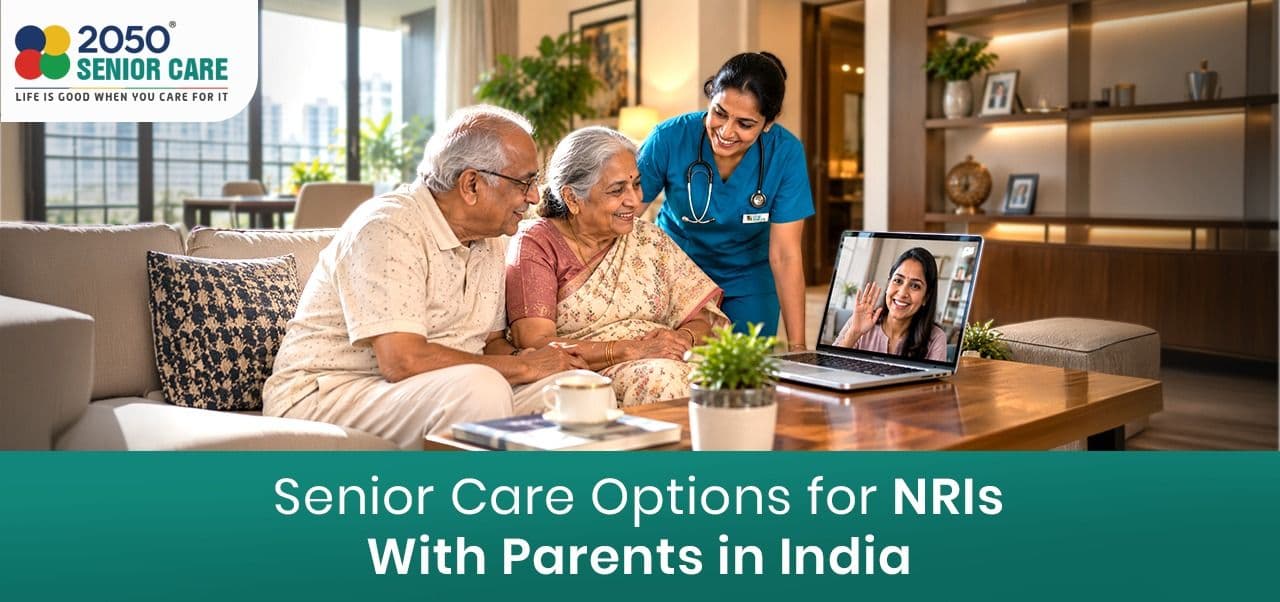
Summary: Living abroad can make it difficult to respond when ageing parents need help. The right care arrangement can provide daily assistance, medical coordination, companionship, or a supportive residential setting. But families should consider health needs, personal preferences, emergency arrangements, and costs before deciding. Regular communication, clear responsibilities, and a reliable local support network can help parents feel secure without losing their independence.
Introduction
Managing the health and safety of aging adults from abroad is a heavy emotional burden. For NRIs with parents in India, the constant distance makes small issues seem overwhelming. Especially when medical needs or daily struggles arise, being thousands of miles away leaves seniors completely helpless. That’s why finding reliable senior care services is truly necessary.
Thankfully, structured support systems now exist. Families can arrange routine medical checkups, companionship, and quick emergency responses without needing to be physically present. These solutions can help your parents with independence while keeping you perfectly informed. Let us look at practical ways to build a strong safety net for them.
Why NRI Families Should Look for Senior Care
Nowadays, reliable senior support is becoming more important for India's aging population. In March 2026, the Government of India reported that the growth of the elderly population aged 60 and above is projected to reach 23 crore by 2036, representing 14.9% of the population. These are projections, not current population figures.
If you are living abroad and your parents are in India, then sometimes ordinary responsibilities can be complicated. Although parents may manage their daily routines comfortably, they may struggle after an illness, a fall, or a change in mobility. Some may also feel reluctant to ask their children for help because they don’t want to cause stressful situations.
So, in this case, a care plan can clarify who checks on parents, who accompanies them to appointments, how urgent decisions are handled, and who communicates with family members abroad.
Do you know? India has a national helpline, ELDERLINE 14567, for senior citizens. According to a government update published in September 2026, this helpline operates in 32 states and Union Territories and provides information, guidance, emotional support, and assistance with referrals. It can be a useful additional resource, although it doesn’t replace a dedicated care provider or emergency service.
Available Care Options for Older Adults
Every senior’s daily life complications are different, so the available elderly care services in India can range from occasional help to daily supervision or a more structured living environment. You can review different senior care services available to understand which type of support may best suit your parents' daily needs.
1. Home Care and Companionship
Home care allows parents to stay in familiar surroundings while helping them with daily activities. Depending on the agreed duties, a caregiver may assist with bathing, dressing, mobility, meals, companionship, and medication reminders.
This arrangement would suit parents who value living independently but need support with selected tasks. Before hiring someone, clarify working hours, background checks, replacement arrangements, and the process for reporting concerns.
2. Home Nursing and Medical Support
A trained nurse may be appropriate when a parent needs clinical care, such as wound dressing, injections, or monitoring after hospital discharge. The required qualifications depend on the procedures involved.
Routine caregiving and nursing are not interchangeable. So, families should clarify with the treating doctor what level of medical support is necessary and confirm that the assigned professional is qualified for those duties.
3. Assisted Living Communities
For older adults who need regular support, such as help with daily routines, and who can manage in a shared living environment, assisted living facilities in India can be worth it for them.
As per the facility and care plan, services may include accommodation, meals, personal assistance, organised activities and health monitoring. The level of clinical care varies, so families should never assume that every facility provides 24/7 nursing or on-site doctors.
Some of them offer both short-term and long-term stays, memory care, and palliative care. So, you have to discuss your loved one's needs before deciding whether this type of assisted residential setting is appropriate.
4. Memory Care for Dementia
If your parent is experiencing increased confusion and difficulty following familiar routines, he/she may need a specialist assessment. Dementia care should account for safety, communication, personal dignity, and the person's changing abilities.
However, you should ask whether staff have relevant training, how changes in behaviour are documented, and what happens if a resident needs a higher level of medical care.
5. Short-Term Recovery and Respite Care
Support doesn’t have to be a permanent arrangement. Short-term residential care or temporary caregiving may help after surgery, during rehabilitation, or in case a family caregiver is unavailable.
Thus, before you book, confirm the expected duration, mobility support, therapy arrangements, medical oversight, and discharge plan. The treating clinician should also guide your decisions about rehabilitation and ongoing care.
Selecting the Appropriate Level of Support
For NRIs with parents in India, the most useful starting point is an honest assessment of what their parents can manage comfortably today and what may cause difficulty.
| Your Parent's Situation | Possible Care Arrangement |
|---|---|
| Independent but occasionally lonely | Companionship and scheduled check-ins |
| Needs help with daily activities | Regular home caregiving |
| Requires prescribed clinical procedures | Qualified home nursing |
| Needs daily assistance and social interaction | Assisted living |
| Experiences significant memory or behavioural changes | Clinical assessment and suitable memory care |
| Returning home after hospital treatment | Doctor-led recovery plan with appropriate nursing or rehabilitation |
These are starting points, not medical recommendations. You should go for a doctor's assessment to determine whether home care is sufficient or a more supported setting would be safer.
Moreover, it’s also important to involve parents, when comparing senior living communities in India, because they are going to . Ask what they find difficult, what kind of help they would accept, and which routines they want to preserve.
For further information about residential care, you may see how to choose the best old age home in India, which can also be helpful when preparing questions for facility visits.
Questions to Ask Before Hiring a Care Provider
A polished website or reassuring sales conversation isn’t enough to trust whether a provider is suitable. Families should ask for clear answers before signing an agreement.
- Staff Qualifications: Who will provide the care, and what training or experience do they have?
- Background Checks: What identity, reference, and employment checks are completed?
- Care Records: How are visits, medication reminders, incidents, and changes in condition documented?
- Emergency Response: Who attends locally, who contacts the hospital, and how quickly is the family informed?
- Replacement Arrangements: What happens if a caregiver is absent or leaves unexpectedly?
- Costs: Which services are included, and what attracts additional charges?
- Privacy: Who can access medical records, photographs, and personal information?
- Complaints: Is there a named person who can investigate concerns?
In addition, for residential care, visit the facility where possible. Observe cleanliness, accessibility, food arrangements, staff interactions, and residents' privacy. Ask to review the service agreement and understand how care needs are reassessed.
Managing Emergencies From Abroad
An emergency plan should be written down before anything goes wrong. When a parent becomes unwell, family members might deal with unfamiliar hospital procedures, different time zones, and incomplete medical information. So, it's better to keep a secure record of essential details, including:
- Current medicines, allergies, and major medical conditions.
- Treating doctor's name and contact details.
- Preferred hospital and nearby alternatives.
- Local emergency contacts and the person authorised to assist.
- Insurance information and relevant payment arrangements.
- The parent's preferences about treatment and family communication.
Parents should know whom to call if they can’t reach their children. A local contact should also know when to contact emergency services rather than waiting for a distant family member to respond.
Do you know? India's unified emergency number is 112, which connects people with emergency response services. Families should confirm whether their parents are able to access a phone and understand how to request help. The number isn’t a substitute for a provider's agreed response process or a guarantee of a particular arrival time.
Budget for Long-Term Senior Care
Senior care costs vary with location, staff qualifications, care hours, accommodation, medical needs and other services that are included. If you get a care of low monthly fee that might hide the cost of nursing visits, transport, medicines or emergency support, which would be charged separately. Thus, when comparing providers, ask for an itemised estimate covering:
- Monthly or hourly care charges.
- Accommodation, meals and personal assistance, where applicable.
- Nursing, doctor visits, physiotherapy and medical supplies.
- Hospital transport and appointment accompaniment.
- Deposits, cancellation terms and additional service charges.
- How prices may change if care needs increase.
Conclusion
The most suitable care arrangement is one that meets your parents’ needs as well as keeps their independence, comfort and choice intact. As their health or mobility changes, regular review is also crucial to maintain an appropriate care plan. We being one of the best senior care services in India, offer senior care support across India and are ready for families who want residential care and related support.
So, if you would like to discuss your parent's circumstances and suitable arrangements, please contact our team for further information.
FAQs
Can I arrange senior care for my parents while living abroad?
Yes. Many providers allow families to enquire, discuss care requirements and coordinate arrangements remotely. You just need to confirm how assessments, consent, payments and ongoing updates will be managed.
Is home care better than assisted living?
Neither is automatically better. Home care preserves familiar surroundings, whereas assisted living may offer more structured daily support and social interaction. Compare both according to your parent's needs and preferences.
How much does senior care cost in India?
Costs vary by city, care hours, accommodation, staff requirements and medical needs. Request itemised quotations from providers and check which services are excluded from the quoted price.
What if my parent has dementia?
Seek a medical assessment and discuss the level of supervision required. A specialist memory care arrangement may be suitable when ordinary home support can’t safely meet the person's needs.
Can my parents stay together in an assisted living facility?
Some facilities offer accommodation for couples too, but availability and suitability may vary. Ask whether both partners can stay together even if one requires more assistance than the other.